
.png)
.png)
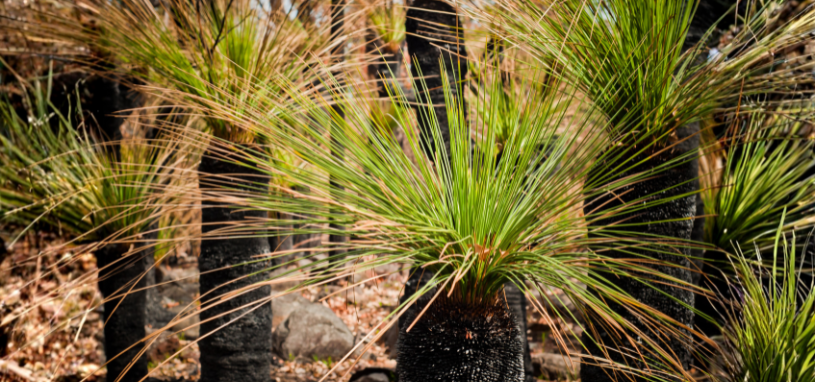
From bush tracks to backyards, grass trees, or Xanthorrhoea, are an Australian icon. With their striking silhouettes, slow-growing trunks, and dramatic crowns of fine leaves, they bring an unmistakable sense of character to any garden.
They’re also surprisingly resilient. Once established, grass trees cope well with Melbourne’s dry summers, gusty winds, and free-draining, sandy soils, making them a stand-out sculptural feature that lasts.
If you’re thinking about grass tree planting, getting the basics right early is key. In this guide, we’ll walk you through when and where to plant your grass tree, the different ways you can grow one, and how to care for it as it settles in.
For a deeper dive into grass tree varieties, growth habits, and what makes them such a uniquely Australian plant, explore our complete guide to grass trees here.
When and where to plant your grass tree
Choosing the right time and place to plant your grass tree plays a big role in how well it establishes. While grass trees are hardy once settled, they can be slow to recover from planting shock, so setting them up properly from day one makes a real difference.
Best time to plant a grass tree
In Melbourne and across Victoria, the best time for grass tree planting is during the milder months, when temperatures are steady, and the soil is still warm.
Early autumn and spring are ideal. These seasons allow roots to establish before the extremes of summer heat or winter cold arrive. Planting in peak summer can stress young grass trees, while winter planting can slow root development in cold, wet soil.
If you do need to plant outside these windows, just be prepared to monitor moisture closely and protect the plant from extreme weather.
Choosing the right spot
Grass trees naturally grow in open, well-drained environments, and they respond best when those conditions are recreated in your garden.
Look for a position that offers good drainage, plenty of airflow, and enough space for long-term growth.
Avoid low-lying areas where water collects, as prolonged moisture around the crown is one of the most common causes of grass tree failure. If your soil is clay-based, planting on a slight mound or in a raised area helps water move away from the crown.
Grass tree planting steps
Grass trees can be grown in a few different ways, depending on your budget, your garden design, and (most importantly) your patience level. Whether you’re starting from seed or transplanting an established plant, the foundations stay the same: excellent drainage and steady care while the plant settles in.
Growing grass trees from seed
Growing grass trees from seed is the slowest method, but it’s also one of the most rewarding. Fresh seed germinates best and can take anywhere from a few weeks to several months to sprout, so patience is essential.
- Start by filling a pot with a free-draining native potting mix or a blend of sand and propagation mix.
- Scatter the seeds across the surface and press them in lightly, but don’t bury them deeply.
- Add a thin layer of washed sand over the top, just enough to hold them in place while still allowing light through.
- Water gently and keep the mix just moist, not wet.
- Place the pot somewhere warm and bright, out of harsh direct sun.
Once seedlings appear, avoid disturbing them or repotting too early. Grass trees dislike root disturbance, and slow, steady growth is exactly what you’re aiming for.
Transplanting a grass tree
Once your grass tree has developed a strong root system and a firm base, it can be planted in the garden. The same approach applies when transplanting an established grass tree.
- Water the plant well beforehand, then dig a hole slightly wider than the root system but no deeper than the current soil level.
- Gently position the plant, backfill with free-draining soil, and firm lightly. Avoid compacting the soil heavily around the base, as grass trees prefer airflow around their roots.
- Water in gently, then apply a light layer of mulch around the root area, keeping it clear of the trunk.
Over the following months, focus on light, consistent watering rather than soaking. This supports root establishment without increasing the risk of rot.
Don’t be alarmed if growth appears slow. Grass trees often spend long periods establishing underground before showing visible change above ground.
Growing grass trees in a pot
Grass trees can grow very well in pots, especially when they’re young. Container growing is a great option if you’re short on space, want to feature a grass tree on a deck or courtyard, or prefer to control soil and drainage more closely.
- Start with a wide, heavy pot with excellent drainage holes. Grass trees develop strong, spreading root systems, so stability is important as they grow.
- Use a free-draining native potting mix or a sandy soil blend designed for Australian plants. Avoid standard garden soil or moisture-retentive mixes, which can hold too much water and increase the risk of rot.
- Position the plant at the same depth it was growing previously, backfill gently, and water lightly to settle the soil.
- Potted grass trees should be placed in a bright position with good airflow. Full sun to light shade is ideal, depending on the variety.
- Let the pot dry slightly between waterings, and never allow it to sit in a saucer of water.
As the plant matures, you may need to move it into a larger container. When repotting, try to avoid disturbing the roots and always maintain good drainage.
Always avoid heavy, frequent watering, as excess moisture around the base is one of the most common causes of grass tree problems.
Caring for your grass tree
Once established, grass trees are very low maintenance, which is part of what makes them such valuable long-term garden features. The focus is simply on helping them settle well, then letting them grow at their own pace.
Watering: During the first 6–12 months, water lightly but regularly to help the roots settle into the surrounding soil. Once established, grass trees become very drought-tolerant and usually only need watering during extended dry periods.
Soil and drainage: Good drainage is far more important than rich soil. Grass trees prefer free-draining, sandy or gritty soils and don’t benefit from heavy composting or rich fertilisers.
Pruning and maintenance: Grass trees don’t need pruning in the traditional sense. Over time, old lower leaves will naturally brown and drop away. If desired, these can be carefully removed for a cleaner look, but avoid cutting into the living crown.
Add a grass tree to your garden
Whether you’re starting from seed or planting a young tree, growing a grass tree is a rewarding way to add a truly Australian feature to your garden.


