
Noticed your lemon or mandarin trees have been looking a bit wild? Or has that potted lime tree been producing smaller fruit lately? It might be time to get out those secateurs.
Pruning your citrus trees isn't just about tidying up. It's one of the best things you can do to help it thrive. A little seasonal pruning keeps your tree healthy, encourages better fruiting, and makes it easier to manage as it grows. Knowing how and when to prune citrus trees is the key.
Because Melbourne's climate can swing from frosty mornings to hot, dry afternoons, timing really matters. This guide walks you through the best time to prune, the exact steps to follow, and a few local tips to help your citrus tree bounce back beautifully.
When to prune your citrus tree
In Melbourne, the best time to prune citrus trees is late winter to early spring (roughly between August and early November). By this stage, the coldest weather has passed, reducing the risk of frost damage on freshly cut branches and new shoots.
Pruning during this window encourages strong spring growth and helps prepare your tree for flowering as the weather warms in December.
If your tree has put on lots of leafy growth over summer, you can also do a light tidy-up mid-season, as long as the weather is mild. Avoid pruning during heatwaves, as any newly exposed branches can sunburn quickly, especially on lemons and limes. If daytime temperatures are consistently above 30°C, hold off until conditions ease.
Pruning at the right time helps to:
- Encourage new fruiting wood by directing energy into fresh, productive growth.
- Reduce pests by removing crowded or unhealthy branches where insects thrive.
- Improve airflow and sunlight so the centre of the tree stays healthy and dry.
- Prevent frost or sun damage on newly exposed branches.
How often to prune your citrus tree
How often you prune depends on the age, size, and growth habit of your tree. Citrus trees don't need heavy pruning every year, but a little regular maintenance keeps them healthy.
Young trees (0–3 years)
- Keep pruning light and minimal.
- Focus on shaping the basic framework and removing damaged growth.
- Avoid removing too much foliage, as young trees need plenty of leaves to establish strong roots.
Established trees (3+ years)
- Light prune once a year in late winter/early spring to control size, improve airflow, and encourage new fruiting wood.
- Larger structural pruning every two to three years, especially if the tree is getting tall, dense, or unbalanced.
How to prune your citrus tree
Pruning citrus trees is simple once you know what to look for. These steps work for most varieties, whether you're growing lemons, mandarins, oranges, limes, or cumquats.
Tools you'll need
Before you start, gather:
- Clean, sharp secateurs for small branches
- Loppers for thicker wood
- Disinfectant spray to clean tools between cuts
- Gloves for protection
- Optional: a pruning saw for older or dense trees.
Clean and sharpen your tools to make cleaner cuts.
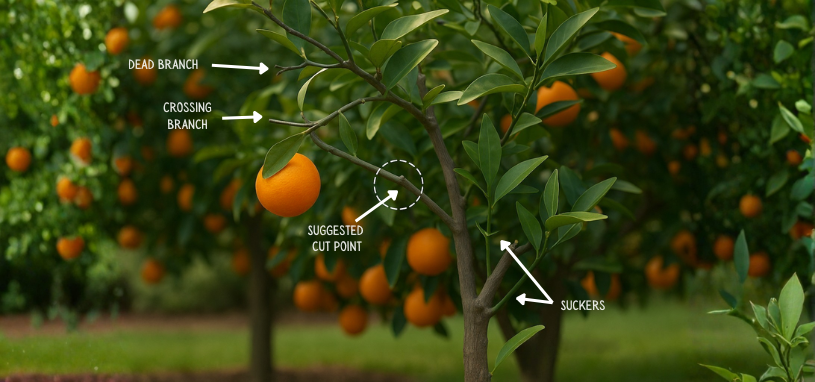
Citrus tree pruning diagram
Step-by-step pruning instructions
Begin by removing anything that's affecting the tree's health or structure. This simple first pass often makes the biggest difference.
- Remove dead, damaged, or diseased wood so the tree can divert energy for new growth.
- Cut out crossing or rubbing branches to prevent bark damage and improve airflow.
- Remove inward-growing branches that clutter the centre and reduce light.
- Remove water shoots (fast, upright stems that drain energy from fruiting wood).
- Remove suckers below the graft line, as they won’t produce good-quality fruit.
- Thin the canopy until you can see small patches of sky through it, which helps with airflow and sunlight.
- Make clean cuts just above outward-facing buds to encourage growth in the right direction.
- Remove excessively long or sagging branches that pull the canopy out of shape.
Aim to remove no more than about 20% of the canopy on established trees to avoid reducing next year’s fruiting sites.
Tips by type:
- Lemons: Generally tolerate the removal of larger branches.
- Mandarins: Keep removal light. Too much thinning can reduce next year's fruit.
- Limes: Avoid opening the canopy too much. They're more prone to sunburn and frost damage.
Now you'll have a clearer view of the tree's overall shape.
How to trim and shape your citrus tree
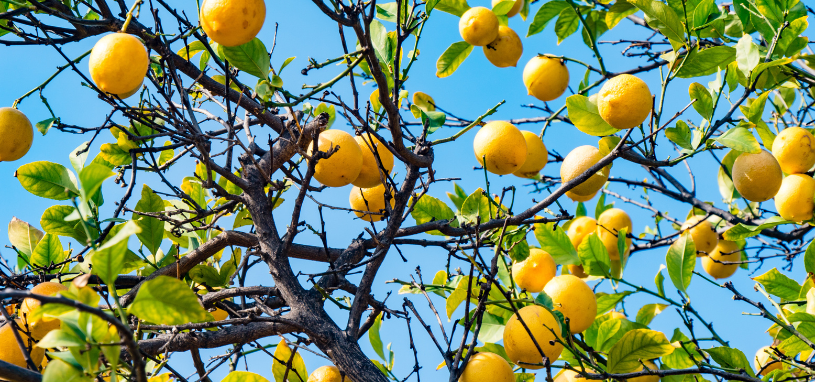
Shaping helps your citrus stay productive and easy to harvest. Aim to:
- Create an open vase shape so light and air can reach the centre.
- Maintain a comfortable picking height (around 2 to 2.5 metres).
- Remove inward-growing shoots that clutter the canopy.
A well-shaped tree grows more evenly, produces better-quality fruit, and is far easier to maintain long-term.
Young citrus trees benefit the most from shaping, especially in the first two years of their life, when structure is easiest to set.
Hard pruning vs light pruning
Most citrus trees only need light pruning each year, with small trims to tidy the canopy and encourage healthy growth.
A hard prune means removing larger branches or cutting back up to 20 to 30% of the canopy. This helps rejuvenate neglected, oversized or misshapen trees.
When to avoid hard pruning:
- During frost-prone winter periods
- During extreme summer heat
- Right before flowering
- On limes and cumquats, which dislike heavy cuts.
Lemon trees tolerate hard pruning best, making them the most forgiving species.
How to prune citrus trees in pots
Citrus trees grown in pots follow the same basic pruning rules as in-ground trees, but they benefit from slightly gentler shaping.
- Prune in late winter or early spring, once frost risk has passed.
- Keep the canopy smaller to match the restricted root system.
- Remove any leggy or sprawling branches to keep the plant compact and balanced.
- Trim lightly around the top and sides for an even, rounded shape.
- Refresh the potting mix yearly and ensure the tree isn't becoming root-bound.
Potted citrus trees often grow faster than people expect. A little regular shaping keeps them manageable.
Caring for your citrus tree after pruning
A little citrus tree care after pruning helps it bounce back quickly and encourages healthy new growth.
- Water well for the next week or two to keep the soil consistently damp (not soggy) as the tree recovers.
- Feed in early spring with a citrus fertiliser to support new shoots and fruiting wood.
- Mulch around the trunk base to maintain soil moisture and protect roots from temperature swings.
- Protect newly exposed branches from harsh sun, especially on lemons and limes, which can sunburn easily.
- Watch for common pests like scale, leaf miner, gall wasp, and aphids, as fresh growth is especially attractive to insects.
These small steps help your tree recover faster and set it up for a strong growing season.


