
If your fruit trees are looking a bit more wild than fruitful, it might be time for a prune. A quick tidy here and a trim there will encourage your tree to produce bigger, better-quality fruit. Think delicious summer salads and year-round snacking.
When pruning fruit trees, it's all about the timing and technique.
Here in Victoria, our frosty winters and warm, sometimes unpredictable summers mean each type of fruit tree has its sweet spot for pruning. Get it right, and when harvest season rolls around, you'll be enjoying the literal fruits of your labour. Miss the window, and you might be waiting another year.
Here's your simple guide on when to prune your fruit trees, how to do it, and the best approach for different fruit tree varieties.
When to prune fruit trees in Victoria
Pruning fruit trees isn’t a one-season-fits-all job. In Victoria, the best time to prune depends on whether you’re growing pome fruit (like apples and pears) or stone fruit (like peaches, nectarines, plums, and apricots). Each group responds differently to cold weather, heat, and humidity, so choosing the right pruning window will have a big impact on your harvest.
As a general rule, pome fruit are pruned in winter, while stone fruit are pruned in mid to late summer after harvest.
If you’re growing lemons, limes, mandarins, or oranges, you’ll find our full guide on how and when to prune citrus trees here.
Winter pruning (June to August)
Best time to prune: pear, nashi, and apple trees.
Winter is the ideal time to prune pome fruit because the trees are dormant. With the leaves gone, it’s much easier to see the entire structure of the tree and remove older wood that no longer produces fruit. A winter prune sets up a strong shape for the year ahead and encourages fresh, vigorous shoots that develop into next season’s fruiting wood.
Summer pruning (January to March)
Best time to prune: peach, nectarine, plum, apricot, and cherry trees.
Stone fruit prefer a summer prune once the bulk of their fruit has been picked. Warm, dry weather helps cuts heal more quickly, lowering the risk of fungal problems. A summer prune also keeps these fast-growing varieties under control, improves airflow through the canopy, and helps maintain a manageable size and shape.
When not to prune
When is it too late to prune your fruit trees?
It’s generally too late once the tree has moved into late spring or early summer growth. By this point, fruiting wood for the coming season has already formed, and pruning now can remove the very shoots that will carry your next crop. Late autumn is also risky because fresh cuts don’t heal well heading into winter and can be damaged by frost.
Always avoid pruning:
- Late spring: You may be cutting off developing fruiting wood.
- Late autumn: Fresh cuts are slow to heal and vulnerable to frost.
- During flowering: This disrupts pollination and reduces fruit set.
- During extreme heat: Newly exposed limbs can sunburn or stress the tree.
- When frost is forecast: Cold snaps can damage open cuts.
- Right before fruit sets: Pruning now removes shoots that will produce fruit.
- After heavy rain or in very humid weather: Damp conditions increase fungal risk.
How to prune fruit trees
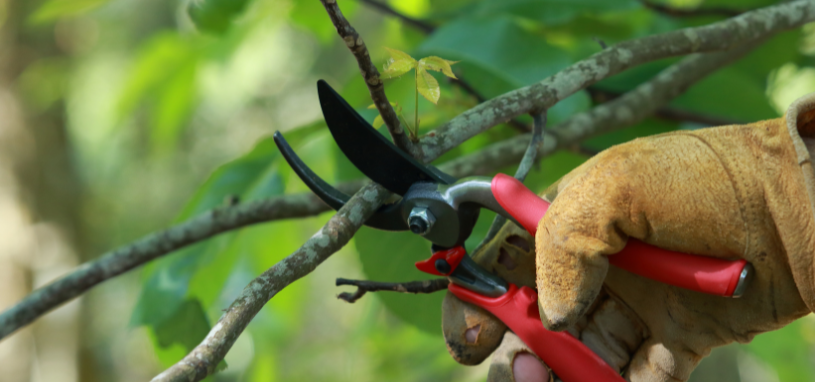
Pruning fruit trees is all about creating a healthy, open structure that lets sunlight reach the fruiting branches and keeps air flowing through the canopy. This makes your tree easier to manage as it grows. Whether you're shaping a young tree or refreshing an older one, the fundamentals stay the same.
Start with the basics
Before you make any shaping cuts, work through this simple checklist, known as the 3 C’s of pruning. It’s one of the easiest ways to know where to prune fruit trees first:
- Crossing branches: Those that grow into or across each other.
- Crowded canopy: Dense clusters of branches that block sunlight and reduce airflow.
- Competing leaders: Strong vertical shoots trying to replace the main trunk.
These three issues highlight where the tree most needs attention and help you decide where to start.
Pruning steps
Tools you’ll need:
- Clean, sharp secateurs (for thin branches)
- Loppers (for thicker branches)
- Pruning saw (for old or heavy wood)
- Disinfectant spray (to clean tools between cuts)
- Gloves and eye protection
Fruit tree pruning diagram
.png)
Remove dead or damaged wood
Anything dry, cracked, sunburned, or clearly lifeless should go first. This opens the tree up and prevents pests from hiding in weak branches.
Remove crossing or rubbing branches
Branches that touch or scrape against each other create wounds where disease can enter. Choose the stronger, better-positioned branch and remove the other.
Remove water shoots
These long, upright stems grow quickly and drain energy from the fruiting wood. Remove them cleanly at the point where they emerge.
Remove suckers below the graft
Any growth below the graft line comes from the rootstock, not the fruiting variety. They should be removed promptly.
Shape to create an open structure
Most fruit trees benefit from an open vase-shaped structure, where light can reach the centre and airflow keeps the canopy dry.
Aim for 3 to 5 strong main branches, outward-facing growth, and space between branches so light can filter through.
Important note: Never cut below the graft union
The graft union (often a slight swelling near the base of the trunk) marks where your fruiting variety was joined to the rootstock.
Any wood below this point will not produce the fruit cultivar you purchased.
Always make sure your cuts sit above the graft.
Pruning by fruit tree type
Different fruit trees respond differently to pruning. Here’s a clear table outlining each tree’s preferred timing and pruning styles.
Fruit tree pruning table
Give your fruit trees the best start to the season
A little pruning now sets your trees up for years of healthy growth and generous harvests. Whether you’re caring for a young apple tree or refreshing an old stone fruit favourite, the right cuts in the right season make all the difference. And if you need a hand getting your orchard into shape, we’ve got everything you need.


