
.png)
.png)
Australia is known for its rugged bushland and wild coastlines, landscapes shaped by some of the toughest and most distinctive plants in the world. From flowering shrubs alive with birds to low-growing natives that carpet the forest floor, Australian plants have evolved to thrive in our often harsh climate and soil conditions.
What if you could bring that same character and resilience into your own backyard? This guide explores some of our favourite Australian native plants to grow in Melbourne, with practical advice to help you build a garden that’s beautiful, resilient, and unmistakably local.
Explore our full range of Australian native plants online, or visit us in the nursery to see what’s growing and chat with our team about the best natives for your space.
Quick links: Explore Australian native plants by type
Use this guide to jump straight to the type of native plants you’re looking for.
- Native flowering plants: Kangaroo paw, grevillea, bottlebrush, banksia, correa
- Native shade plants: Lomandra, redback native ginger
- Native ground cover plants: Native violet, creeping boobialla, trailing pratia
- Native screening plants: Lilly pilly, westringia
- Native climbing plants: Running postman
Native flowering plants
Australian native flowering plants are known for their distinctive blooms and rich nectar, making them ideal for adding long-lasting colour while attracting birds and pollinators throughout the year.
.png)
Angiozanthos (Kangaroo paw)
Kangaroo paws are one of Australia’s most recognisable native flowers, loved for their bold, upright stems and velvety blooms in reds, yellows, pinks, greens, and bi-colours. They flower for long periods and make striking feature plants in garden beds and pots.
In Melbourne gardens, kangaroo paws perform best in sunny, well-drained positions. They’re relatively fast-growing and respond well to regular dead-heading, which encourages repeat flowering.
.png)
Grevillea (Spider flower)
Grevilleas are incredibly diverse, ranging from compact ground covers to large flowering shrubs. Their spider-like flowers appear in a wide range of colours and are a magnet for birds and pollinators.
Most grevilleas grow well in Melbourne, particularly in free-draining soil and sunny to lightly shaded positions. Many varieties flower for extended periods, making them a feature for year-round interest.
.png)
Callistemon (Bottlebrush)
Bottlebrush are a classic Australian native plant, producing vivid red, pink, or cream flower spikes that line its stems and light up the garden in spring and summer. They work beautifully as feature shrubs, informal hedges, or screening plants, flowering best with good sun exposure.
In Melbourne, callistemons are reliable, hardy performers that tolerate a range of soils once established. They respond well to light pruning, which helps maintain shape and encourages dense growth.
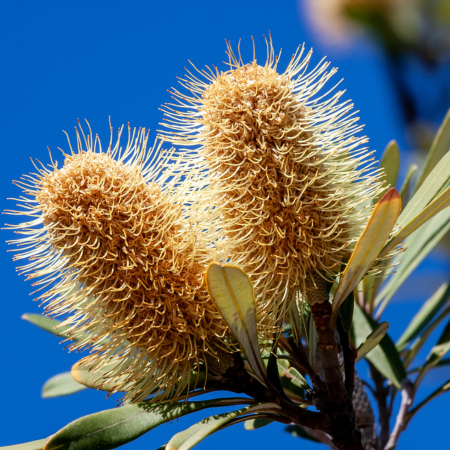
Banksia
Banksias bring bold texture and architectural form to native gardens. Their distinctive flower cones appear across many species and provide an important nectar source for birds and insects.
Many banksias thrive in Melbourne’s sandy or free-draining soils and cope well with dry periods once established. They’re particularly suited to larger garden spaces and can be used as feature trees or screening shrubs.
.png)
Correa (Native fuchsia)
Correas are compact native shrubs with soft foliage and delicate, bell-shaped flowers that appear mainly in the cooler months. This makes them especially valuable for bringing some winter colour.
They grow well in Melbourne gardens, particularly in part shade or dappled light, and are ideal for sheltered garden beds, understorey planting, and courtyards.
Native shade plants
Not every part of the garden is drenched in sun. In Melbourne, many gardens have areas under trees or along fences that receive filtered or limited light. The good news is that there are plenty of Australian native plants that naturally thrive in these lower-light environments.
.png)
Lomandra longifolia (Tanika lomandra)
Tanika lomandra is a tough, clumping native with arching green foliage that works beautifully in part shade. It’s widely used in Melbourne landscapes for its clean form, drought tolerance once established, and ability to handle a range of soils.
Tanika works well as a border plant, mass planting option, or low-maintenance filler in shaded garden beds. It’s slow to medium growing, holds its shape naturally, and only needs occasional trimming to remove spent flower stems.
.png)
Alpinia caerulea (Redback native ginger)
Redback native ginger is a striking shade-loving plant with lush green leaves and distinctive red undersides. It thrives in sheltered, shaded positions and brings a tropical feel to Melbourne gardens without the high maintenance.
This native prefers consistent moisture and protection from harsh afternoon sun. It works beautifully as a feature plant in shaded corners, beneath taller trees, or as a soft screening plant in protected spaces.
Native ground cover plants
Australian native ground covers naturally grow along forest floors, coastal edges, and open bushland, making them well-adapted to Melbourne’s variable conditions. Once established, native ground covers are generally low maintenance and water-wise, performing reliably through dry summers while still supporting insects, lizards, and birdlife.
.png)
Viola hederacea (Native violet)
Native violet is a soft, spreading ground cover with rounded green leaves and delicate purple-and-white flowers that appear for much of the year. It naturally thrives in cool, shaded environments, making it ideal for under trees, along paths, and in sheltered courtyards.
In Melbourne gardens, native violet performs best in part shade to full shade with reasonably moist, free-draining soil. It forms a dense mat over time and is excellent for filling gaps between stepping stones or beneath shrubs.
.png)
Myoporum parvifolium (Creeping boobialla)
Creeping boobialla is one of Australia’s toughest native ground covers. It spreads horizontally to form dense coverage, helping suppress weeds and stabilise soil across larger garden areas.
It grows particularly well in Melbourne’s free-draining soils and coastal or exposed sites. Once established, it tolerates drought, wind, and heat, making it ideal for embankments, nature strips, and open garden beds.
.png)
Pratia pedunculata (Trailing pratia)
Trailing pratia is a fine-textured, low-growing native ground cover that forms a soft green carpet dotted with tiny star-shaped flowers through the warmer months.
It thrives in part shade to full shade and prefers cooler root zones, making it a beautiful option for shaded borders, between pavers, or beneath shrubs. In Melbourne, it performs best where the soil stays lightly moist but well-drained.
Native screening plants
Australian native screening plants are ideal for adding privacy, softening fences, and creating wind protection without relying on hard landscaping. Many natives establish quickly, respond well to shaping, and cope with Melbourne’s changing weather conditions.
.png)
Syzygium (Lilly pilly)
Lilly pillies are one of the most popular native screening plants, prized for their dense foliage, neat growth habit, and fast-establishment. Modern varieties like ‘Goodbye Neighbour’ have been bred for reliable hedging, improved pest resistance, and consistent form.
In Melbourne gardens, lilly pillies grow best in full sun to part shade and adapt well to most soil types with good drainage. They respond well to regular trimming, which encourages thicker growth and stronger screening.
.png)
Westringia fruticosa (coastal rosemary)
Westringia is a tough, compact native shrub commonly used for low to medium screening. With soft grey-green foliage and delicate mauve flowers, it offers a more relaxed, coastal look compared to formal hedges.
It grows really well in Melbourne gardens, tolerating wind, heat, light frost, and dry conditions once established. Westringia prefers free-draining soil and benefits from light pruning to maintain shape and density.
Native climbing plants
Australian native climbers are a beautiful way to add vertical interest, soften structures, and bring living flowers into raised garden spaces. They’re well-suited to Melbourne conditions, particularly on fences, pergolas, archways, and trellises.
.png)
Kennedia prostrata (Running postman)
Running postman is a low-growing, trailing native climber known for its vivid red flowers and spreading habit. Rather than climbing high, it works beautifully over embankments, walls, and as a flowering ground cover.
In Melbourne gardens, it grows best in free-draining soil and sunny to lightly shaded positions. It’s relatively low maintenance and provides excellent seasonal colour while supporting birdlife.


